
Category Archives: Yogurt- Homemade

Pepsi Prebiotic Soda

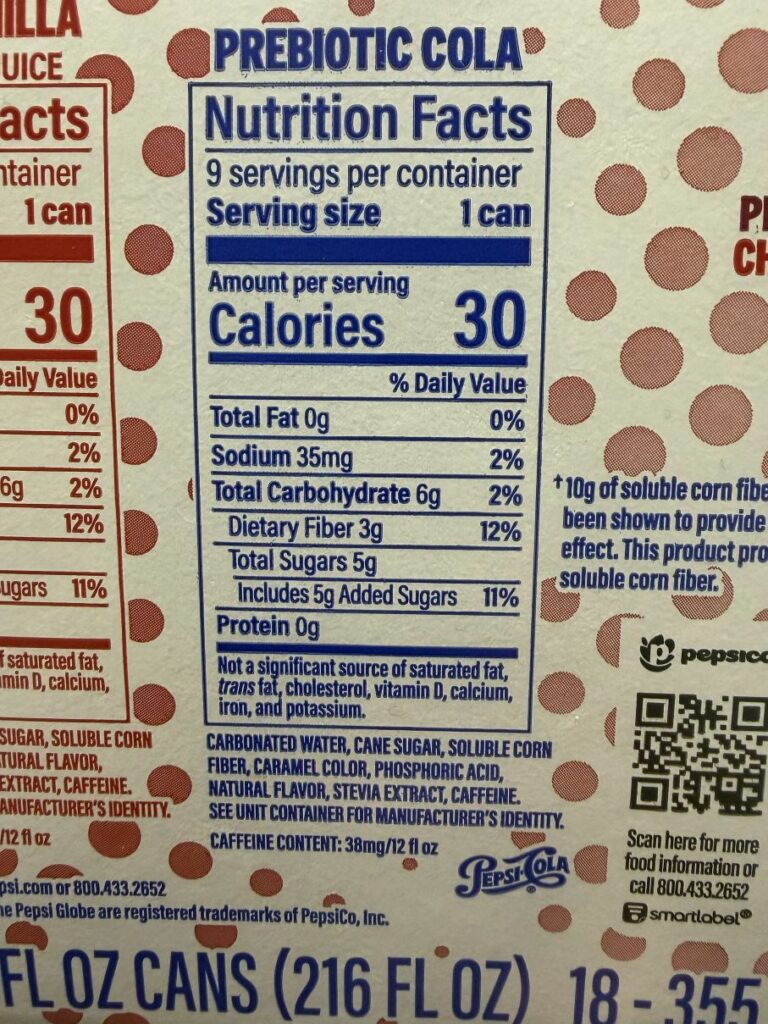
I was grocery shopping and saw an advertisement for a cola with a prebiotic label on it. I looked at the ingredients, and it had soluble corn fiber as the source for the prebiotic. It got me thinking about some of the information and marketing that we see while shopping.

 I want to talk about what is a prebiotic? What is a good source of prebiotics, and why do we need a good source of prebiotics?

 So first, what is a prebiotic? Prebiotics are non-digestible fibers that nourish beneficial gut bacteria, helping improve digestion, support immune function, and promote the production of short-chain fatty acids that benefit colon health and metabolism. So, in simple words, it is food that the gut bacteria feed on.

Second, what is a good source of prebiotics? Let’s look at the different types of prebiotics. The first and best is inulin. Inulin is found in onions, garlic, and asparagus. Another prebiotic is fructooligosaccharides (FOS). The types of foods high in this prebiotic are slightly green bananas, garlic, onions, and asparagus.  Galactooligosaccharides (GOS) are one of the most well-researched prebiotics and are especially effective at selectively feeding beneficial microbes with minimal digestive discomfort. Good sources of this prebiotic are lentils, chickpeas, black beans, kidney beans, soybeans, cashews, and pistachios.

The soluble corn fiber, which was in the “prebiotic cola”, provides a gentler, more moderate effect and is often included in processed foods, making it useful but not as impactful as these more powerful, naturally derived prebiotic fibers. 
The answer to why we need a good source of prebiotics is because that is the food that stimulates the growth of beneficial bacteria in our digestive tract (gut). If we have healthy bacteria in our digestive tract, then that will support slower, steadier fermentation and add additional metabolic benefits like improved insulin sensitivity. It also helps maintain the lining of our digestive tract so that we don’t have permeability in the lining that will lead to leaky gut, which will cause inflammation throughout the body. 

One of the most important aspects of the gut biome, or bacteria in our digestive tract, is the type of bacteria we have in the different sections of our tract. When we have bacteria that is normally found in the large intestine migrates into the small intestine, it is called Small Intestine Bacterial Overgrowth (SIBO). This may be due to our diet or antibiotic use, and it disrupts the ecosystem in our intestines, and will lead to many symptoms and health issues. Prebiotics tend to bypass the bacteria in the small intestine and are used by the bacteria in the large intestine. So even if we are eating from a good source of prebiotics, we can still have issues since we have the wrong bacteria in the wrong location in the digestive tract. We first must fix the problem and then feed the beneficial bacteria the right prebiotic. 

One way to fix SIBO is to eat the right yogurt that promotes the growth of the beneficial bacteria in the small intestines and inhibits the growth of the wrong bacteria in the small intestines. I have written about this problem and solution before, and it can be found in the blog section of collardchiropractic.com titled “Discover the Power of Homemade Probiotic Yogurt”.

My final take on the prebiotic cola is that it is a poor source of prebiotics, and if you don’t have the proper bacteria in the small intestine, then you won’t get much benefit from the drink. It is a weak marketing gimmick that might trick us into thinking that drinking the prebiotic cola is good for our health. 

Food Sensitivity Testing


Discover the Power of Homemade Probiotic Yogurt

Category : Blog , Yogurt- Homemade

Welcome to the world of gut health! At Collard Chiropractic & Acupuncture, we’re passionate about probiotics and believe our Standard Process products are among the best. But for the ultimate probiotic experience, nothing beats making your own yogurt at home. It’s affordable, natural, and packed with biodiverse probiotics that your body will love. Unlike store-bought yogurt, homemade yogurt lets you control the process to maximize health benefits. Ready to transform your gut health? Let’s dive into why homemade yogurt is a game-changer and how you can start today!

Why Homemade Yogurt?

Store-bought yogurt is often cooked at high temperatures for just 4 hours, which reduces the number of live probiotics. Our method, by Dr. William Davis, uses low temperatures and extended fermentation to create a probiotic-rich superfood. By fermenting for 36 hours at 98–100°F, you preserve and amplify the beneficial bacteria, supporting a healthy, biodiverse gut.

Homemade yogurt is:

  • Cost-Effective: Save money compared to pricey store-bought options.
  • Customizable: Choose strains like L. reuteri or SIBO-specific probiotics to suit your needs.
  • Nutrient-Dense: Your body absorbs probiotics from real food more effectively than supplements.

What You’ll Need to Make Yogurt at Home

To get started, you’ll need a few key items. We’ve personally tested and recommend the following equipment and ingredients for the best results.

Equipment

  • Yogurt Maker: Choose one based on the quantity you’ll make (e.g., for a family or individual). Look for:
  • Glass Jars: Use glass for fermenting in a water bath. Ensure lids are secure to prevent water from entering.
  • Water Bath Setup: Fill your yogurt maker with water to the same level as the yogurt in the jars for consistent heating.

Products: Amazon Suteck Yogurt Maker , Amazon Sous Vide Cooker ,

Ingredients for L. reuteri Yogurt

We recommend starting with the L. reuteri strain for its gentle yet powerful health benefits. After 4 weeks, you can switch to a SIBO-specific strain for advanced gut support.

Recipe for L. reuteri Yogurt (36-Hour Fermentation, 100°F)

Instructions:

  1. Crush the Gastrus tablets and mix with inulin.
  2. Add a small amount of half-and-half to create a smooth slurry (this prevents clumping).
  3. Stir in the remaining half-and-half and mix thoroughly.
  4. Pour into glass jars, secure lids, and place in the yogurt maker’s water bath.
  5. Ferment at 100°F for 36 hours. Note: Your first batch from tablets wil have a strong smell and taste. *Use 2 tablespoons from the first batch to make the second batch. Your second and third batch will be a smoother, tastier result.

Why L. reuteri?

This probiotic strain is gentle, making it ideal for beginners. It supports digestion, immunity, and overall gut health. After a month, consider transitioning to a SIBO-specific strain for targeted benefits. Want to learn more about probiotic strains? Explore Dr. William Davis’s yogurt recipes and join dedicated communities on L. Reuteri & SIBO Yogurt Facebook Group .

Ingredients for SIBO

SIBO yogurt is specifical for your small intestines. Because it is going after the bad bacteria in your small intestines we don’t want to create room for fungas to grow in its place. We recomend taking an anti-fungal for the first four weeks while eating the SIBO yogurt. Amazon Anti Fungal Curcumin we recomend two capsules twice per day.

Recipe for SIBO (36-Hour Fermentation, 106°F)

Instructions:

  1. Crush the tablets and mix with capsules and inulin.
  2. Add a small amount of half-and-half to create a smooth slurry (this prevents clumping).
  3. Stir in the remaining half-and-half and mix thoroughly.
  4. Pour into glass jars, secure lids, and place in the yogurt maker’s water bath.
  5. Ferment at 106°F for 36 hours. Note: Your first batch from tablets may have a strong smell or taste. Use it to start a second batch for a smoother, tastier result. We thow away the first batch.

Why SIBO-Specific Yogurt?

Small Intestinal Bacterial Overgrowth (SIBO) occurs when excessive bacteria grow in the small intestine, leading to symptoms like bloating, abdominal discomfort, and nutrient malabsorption. While L. reuteri yogurt is a gentle starting point for improving gut health, transitioning to a SIBO-specific probiotic strain after 4 weeks can target these issues more effectively. Here’s why:

  • Targeted Support: SIBO-specific strains, such as certain Lactobacillus or Bifidobacterium species, are selected to restore balance in the small intestine without exacerbating bacterial overgrowth.
  • Reduces Symptoms: These strains help regulate gut motility and reduce bloating, making them ideal for those with SIBO-related discomfort.
  • Builds on L. reuteri: After 4 weeks of L. reuteri to establish a healthy gut foundation, SIBO yogurt fine-tunes your microbiome for optimal digestion and nutrient absorption.
  • Safe and Gradual: Transitioning after L. reuteri ensures your gut is primed for stronger strains, minimizing potential discomfort.

Get Started Today!

We hope this helps you on a path to healing your gut health, and feeling better. If you have any question please reach out to Dr. Collard through any of the following.

Also read about https://collardchiropractic.com/services/food-sensitivity-testing/


Search

Address

Hours

Monday: 9–12, 2:30–6
Tuesday: 2:30–6
Wednesday: 9–12, 2:30–6
Thursday: 9–12, 2:30–6
Friday: 8–12

Review Us

FacebookGoogle+Yahoo! LocalCitysearchWellness.comYelpLinkedIn